
Why Do Teeth Stain? Here's What's Actually Going On
If you’ve noticed your smile looking a little less bright than it used to, you’re not alone. Tooth discolouration is one of the most common dental concerns people bring up, and it happens to almost everyone over time. The good news is that understanding why teeth stain makes it a whole lot easier to do something about it.
TLDR: Teeth stain for a mix of reasons, including food and drink habits, lifestyle choices, ageing, and sometimes things happening beneath the surface. Knowing which type of staining you’re dealing with is the first step toward a brighter smile.
The Two Main Types of Tooth Staining
Not all tooth stains are the same, and that matters when it comes to treatment. Dentists generally split discolouration into two categories: extrinsic and intrinsic. Each one has different causes and responds to different treatments.
Extrinsic Staining (Surface-Level)
Extrinsic stains sit on the outer layer of your teeth, called the enamel. They’re caused by things that come into contact with your teeth regularly, like food, drinks, and tobacco. These are the stains most people are thinking of when they reach for a whitening toothpaste.
Because they sit on the surface, extrinsic stains are generally easier to treat. Professional cleaning and teeth whitening treatments can make a big difference here.
Intrinsic Staining (Deeper Discolouration)
Intrinsic stains are a bit more complicated. These occur within the tooth itself, in the inner layer called the dentine. They can be caused by certain medications, trauma to the tooth, or developmental factors that affect how the tooth formed in the first place.
Because they’re not on the surface, intrinsic stains don’t respond to standard whitening products. A dentist will usually need to assess what’s going on and recommend a more targeted approach.
Age-Related Discolouration
There’s also a third category worth mentioning: age-related staining. Over time, the outer enamel naturally thins, and the dentine underneath, which is naturally more yellow, starts to show through more. This kind of discolouration is a mix of both intrinsic and extrinsic factors.
It’s completely normal, but it does mean that what worked for your teeth at 25 might not be the full picture at 45.
Common Causes of Tooth Discolouration
There’s a long list of things that can stain teeth, and some of them might surprise you. Here are the most common culprits.
Food and Drink
Certain foods and drinks are notorious for leaving their mark on your teeth. The main offenders include:
- Coffee and tea, especially when consumed daily
- Red wine, which contains tannins that bind to enamel
- Dark-coloured berries like blueberries and blackberries
- Tomato-based sauces and curries
- Soft drinks and sports drinks, which are also highly acidic
- Soy sauce and balsamic vinegar
The pigments in these foods and drinks, called chromogens, attach to the enamel surface over time. Add acidity into the mix and the enamel becomes more porous, making it even easier for stains to take hold.
Tobacco Use
Smoking and chewing tobacco are among the most significant causes of tooth staining. Nicotine and tar from tobacco products penetrate deep into the enamel and are notoriously difficult to shift with standard brushing alone.
Tobacco staining tends to be a yellow-brown colour and often worsens the longer the habit continues. It’s also associated with other oral health concerns, including gum disease and bad breath.
Poor Oral Hygiene
When plaque and tartar build up on the teeth, they create a surface that stains much more easily. Plaque is a sticky film of bacteria, and when you don’t remove it regularly through brushing and flossing, it hardens into tartar, which naturally has a yellow or brown tint.
Regular brushing, flossing, and professional dental cleans are the most reliable way to keep this kind of staining under control.
Certain Medications and Medical Treatments
Some medications are known to cause tooth discolouration as a side effect. Tetracycline antibiotics, for example, can cause significant grey or brown banding in teeth when taken during childhood while the teeth are still developing.
Antihistamines, antipsychotics, and some blood pressure medications have also been linked to staining. Chemotherapy and radiation to the head and neck area can affect both the teeth and saliva, which plays an important role in protecting enamel.
Fluorosis
Fluoride is essential for strong, healthy teeth, but too much of it during childhood development can cause a condition called dental fluorosis. This typically shows up as white streaks or spots on the teeth, and in more severe cases, brown pitting or mottling.
Fluorosis is cosmetic in most cases and doesn’t affect the health of the tooth, but it can be a source of self-consciousness for some people.
Tooth Trauma and Injury
If a tooth takes a knock, the internal tissue can be damaged. The tooth may darken over time as the pulp inside breaks down. This kind of discolouration is intrinsic and often appears grey or brown in a single tooth, which can look quite different from general yellowing across the whole smile.
It’s worth seeing a dentist if a tooth changes colour after an injury, even if it doesn’t hurt, because there may be underlying damage that needs attention.
Why Enamel Matters So Much
Enamel is the hard, translucent outer layer of your teeth. It’s actually the hardest substance in the human body, but it’s not indestructible, and it can’t regenerate once it’s gone. Understanding how enamel works helps explain why teeth become more prone to staining over time.
How Enamel Erosion Contributes to Staining
Acidic foods and drinks gradually wear down enamel in a process called enamel erosion. As the enamel thins, the yellowish dentine beneath becomes more visible. This gives teeth a dull or discoloured appearance that isn’t really a stain at all, but rather the natural colour of the tooth structure showing through.
Erosion also makes the remaining enamel more porous, which means it picks up stains from food and drink more readily. It’s a bit of a double effect.
Enamel and Ageing
As we get older, enamel naturally wears down just from years of chewing and daily use. This is completely normal and happens to everyone. The result is that older teeth often appear more yellow or grey, even in people with excellent oral hygiene habits.
This is why over-the-counter whitening products sometimes have limited results for older adults. The discolouration isn’t purely surface-level, so it needs a more targeted approach.
Can You Protect Your Enamel?
Yes, to a significant degree. Limiting acidic food and drink, using a soft-bristled toothbrush, drinking water throughout the day, and staying on top of your dental check-ups all help preserve enamel over the long term.
Your dentist can also apply fluoride treatments that help strengthen enamel and reduce its susceptibility to staining and erosion.
What You Can Actually Do About Stained Teeth
There’s a lot of noise online about teeth whitening, so it’s worth cutting through it with some straightforward information. Not every product or method is right for every situation, and the best starting point is always a conversation with your dentist.
Professional Teeth Whitening
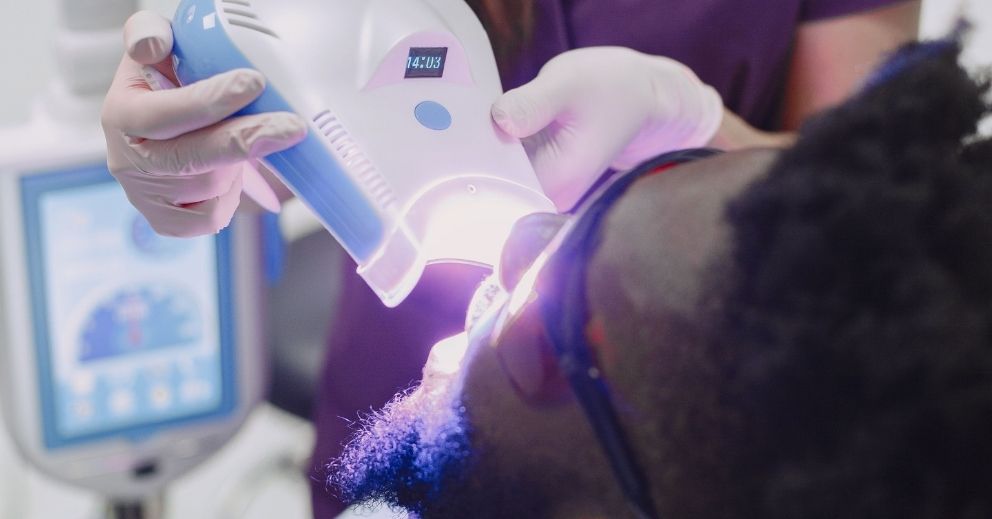
Professional whitening treatments are more effective than anything you’ll find in a supermarket aisle. Your dentist can use higher concentrations of whitening agents safely and tailor the treatment to your specific type of staining. Results are generally faster and more consistent.
In-chair whitening is typically done in a single appointment, while take-home kits from your dentist use custom-fitted trays for a more gradual result over a couple of weeks.
Whitening Toothpastes and Over-the-Counter Products
Whitening toothpastes can help with mild surface staining and are a reasonable maintenance tool after professional whitening. They work mainly through mild abrasives or low-concentration bleaching agents.
They won’t do much for intrinsic staining or more significant discolouration, and some can be abrasive enough to contribute to enamel wear if overused. It’s worth asking your dentist which products they’d recommend for your situation.
Dental Veneers and Bonding
For intrinsic staining or discolouration that doesn’t respond to whitening, cosmetic dental options like porcelain veneers or composite bonding can be very effective. These options cover the tooth surface and can dramatically change the appearance of the smile.
They’re a bigger commitment than whitening, but for the right person in the right situation, the results can be long-lasting and natural-looking.
Lifestyle Adjustments That Help
You don’t have to give up coffee forever, but a few small habits can make a real difference to how quickly your teeth stain:
- Drink staining beverages through a straw to reduce contact with teeth
- Rinse your mouth with water after eating or drinking staining foods
- Brush your teeth twice a day with fluoride toothpaste
- Floss daily to remove plaque from between teeth
- Book regular professional dental cleans, typically every six months
- Quit or reduce tobacco use
A Brighter Smile Starts with the Right Diagnosis
If you’ve been wondering what’s behind your tooth discolouration, the team at Redlands Dental is happy to take a look and talk through your options. Whether it’s a simple clean or something more involved, we’ll give you a straight answer and a plan that actually makes sense for your smile. If you’re based in Redland Bay, Gumdale, or a surrounding area, you can book a consultation to find out what’s causing the discolouration and discuss the most suitable treatment for your smile.
Book a check-up with us and let’s figure out the best next step together, serving patients in the surrounding areas.
Key Takeaways
- Tooth staining falls into two main types: extrinsic (surface) and intrinsic (within the tooth), plus age-related discolouration.
- Common causes include coffee, tea, red wine, tobacco, poor oral hygiene, certain medications, and tooth trauma.
- Enamel erosion makes teeth both more yellow in appearance and more prone to picking up stains.
- Professional whitening is more effective than over-the-counter products for most types of staining.
- Intrinsic staining and severe discolouration may need cosmetic options like veneers or bonding.
- Simple daily habits, like rinsing after staining foods and staying on top of dental cleans, go a long way toward prevention.
FAQ
Are yellow teeth always a sign of poor hygiene?
Not necessarily. Yellowing can be caused by ageing, genetics, certain medications, and enamel thinning, none of which are related to how well someone brushes. That said, poor oral hygiene does accelerate staining, so good habits always help.
Can teeth whitening damage enamel?
When done correctly, professional teeth whitening is considered safe for enamel. Overuse of whitening products, especially abrasive ones, can cause sensitivity and wear over time. Your dentist can guide you on the safest approach for your teeth.
How long do whitening results last?
It depends on your diet and lifestyle. Most people find professional whitening results last anywhere from several months to a couple of years. Avoiding heavy staining foods and tobacco, and doing occasional top-up treatments, can extend the results.
Is tooth discolouration ever a sign of a health problem?
Sometimes. A single tooth that darkens after an injury may indicate nerve damage. White spots can be a sign of early decay or fluorosis. If you notice sudden or unusual changes in tooth colour, it’s worth getting it checked by a dentist sooner rather than later.
Does drinking more water help prevent staining?
Yes, it does help. Drinking water throughout the day helps rinse away food particles and pigments before they have a chance to settle on the enamel. It also supports saliva production, which is your mouth’s natural defence against staining and decay.


 Unhappy With My Smile
 I Have Missing Teeth
 Unhappy With My Dentures
 My Teeth Are Stained or Discolored
 Considering Teeth Straightening
 I Have A Dental Emergency
 Seeking Smile Improvement
 Help With Dental Anxiety
 General Dentistry
 Cosmetic Dentistry
 Restorative Dentistry
 Dental Implants
 Dental Veneers
 Invisalign
 Emergency Dentist
 Sedation and Sleep Dentistry