
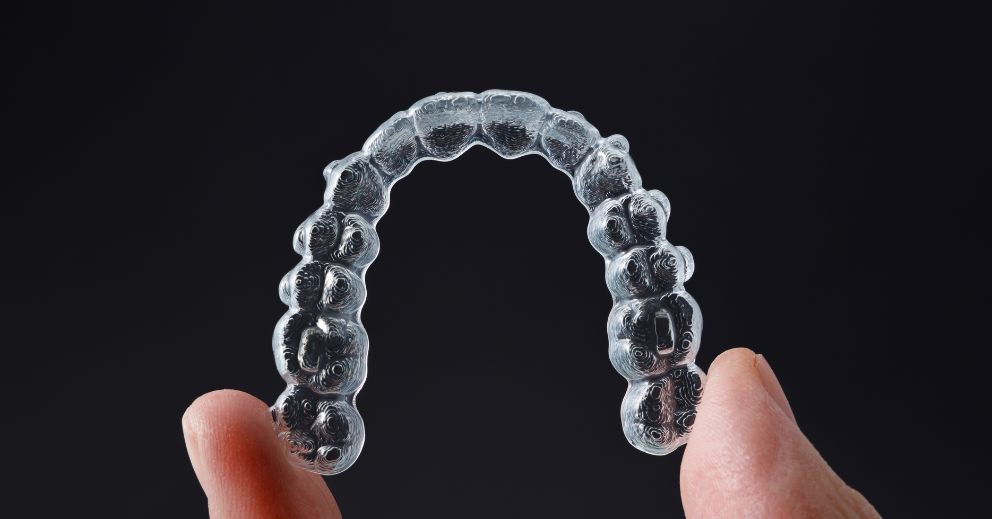
Invisalign vs. Braces: Which Should You Choose?
Here’s a myth worth busting straight away: Invisalign is not just “braces for people who don’t want braces.” A lot of patients assume the two options do the same job in the same way, just with a different look.
In reality, they work quite differently, suit different bite issues, and come with their own pros and cons depending on your lifestyle.
TLDR: Invisalign uses clear, removable aligners and suits mild to moderate alignment issues, while traditional braces use fixed brackets and wires and can handle more complex bite problems. The right choice depends on your teeth, your daily habits, and how involved you want to be in your own treatment. A proper assessment is really the only way to know for sure.
How Invisalign and braces actually differ
Traditional braces use metal or ceramic brackets glued to each tooth, connected by a wire that’s tightened over time. Invisalign uses a series of custom-made clear plastic aligners that you swap out every one to two weeks, gradually shifting your teeth into place.
Both aim for the same result, straighter teeth and a better bite, but the mechanics behind them are quite different. That difference is what makes one option better suited to certain cases than the other.
What braces involve day-to-day
- Fixed to your teeth for the whole treatment, no removing them yourself.
- Regular tightening appointments, usually every four to six weeks.
- Some dietary restrictions; sticky and hard foods are off the menu.
- More thorough brushing and flossing routine needed around brackets.
What Invisalign involves day to day
- Aligners come out for eating, drinking, brushing, and flossing.
- Need to be worn 20 to 22 hours a day to stay on track.
- Fewer in-person check-ins, though progress still needs monitoring.
- Virtually invisible, which matters a lot to some patients and not at all to others.
Which cases suit Invisalign, and which need braces
This is where the myth really falls apart. Invisalign isn’t a universal substitute for braces; it’s better suited to certain kinds of movement. Braces, meanwhile, can still be the more reliable option for complex or severe cases.
When Invisalign tends to work well
- Mild to moderate crowding or gaps between teeth.
- Minor bite issues, such as a slight overbite or underbite.
- Adults and older teens who can commit to wearing aligners consistently.
- Patients who want a more discreet option for work or social reasons.
When braces are usually the better call
- Severe crowding, rotated teeth, or significant gaps.
- Complex bite corrections that need more precise tooth movement.
- Younger patients who may not reliably wear removable aligners.
- Cases involving jaw growth guidance, more common in children and teens.
A dentist or orthodontist will usually take X-rays and photos, then map out how your teeth need to move before recommending one option over the other. It’s not something you can accurately judge just by looking in the mirror.
For patients in Redland Bay, Gumdale, and nearby areas, the same assessment process applies because the right treatment depends on the individual position of the teeth and the type of bite correction needed.
Comparing cost, comfort, and treatment time
These three factors are often what tip the decision one way or the other once suitability has been confirmed. None of them have a single right answer; it depends on your case and your priorities.
Cost considerations
Invisalign and braces often land in a similar price range, though it varies depending on the complexity of your case and how long treatment takes. Simpler cases with Invisalign can sometimes cost less, while more complex ones may cost more due to the number of aligner sets required.
It’s worth getting a clear quote before committing either way, rather than assuming one option is automatically cheaper.
Comfort and lifestyle fit
Braces can cause some irritation to the cheeks and lips, especially in the first week or after a tightening. Invisalign aligners are generally smoother against soft tissue, though new trays can feel tight for a day or two as they start working.
If you play contact sports, travel a lot for work, or simply don’t want to think about food restrictions, that’s worth factoring into your decision.
Treatment time
Both options typically range from several months to a couple of years, depending on how much correction is needed. Invisalign can sometimes move faster for mild cases, but braces often edge ahead for complex corrections since the wire provides constant, controlled pressure.
Common misconceptions about Invisalign and braces
Beyond the “they’re basically the same thing” myth, there are a few other misunderstandings worth clearing up.
“Invisalign is only for adults”
Teenagers can use Invisalign too, provided they’re disciplined about wearing the aligners as instructed. Compliance is really the deciding factor here, not age alone.
“Braces are outdated”
Modern braces are smaller, less noticeable, and generally more comfortable than older versions. For complex bite corrections, they’re still considered the gold standard by many practitioners.
“You can just buy aligners online and skip the dentist”
Mail-order aligner kits skip the diagnostic step entirely, which means underlying bite or gum issues can go unchecked. A proper assessment, whether you end up choosing Invisalign or braces, protects your teeth and gums in the long run.
Invisalign or Braces: Find the Right Option for You
If you’re weighing up Invisalign against braces and want a clear answer based on your own teeth, the team at Redlands Dental can talk you through an assessment and explain what’s realistic for your case. We work with patients who are figuring out the same decision, and we’re happy to walk you through both options without any pressure either way. Book a consultation whenever you’re ready to get some clarity.
Book a consultation with Redlands Dental to discuss your options and receive clear, personalised advice based on your teeth.
Key Takeaways
- Invisalign and braces achieve similar goals but work through different mechanics.
- Invisalign suits mild to moderate cases and patients who’ll wear aligners consistently.
- Braces remain the stronger option for complex bites, severe crowding, or younger patients.
- Costs and treatment times vary case by case; get a personalised quote rather than assuming.
- A proper dental assessment is the only reliable way to determine which option is best for your teeth.
FAQ
How do I know if my teeth are straight enough to skip treatment altogether?
Some minor gaps or slight crowding don’t cause functional problems and some people choose to leave them as is. The bigger question is whether your bite is causing wear, jaw discomfort, or cleaning difficulties, which a dentist can check during a routine exam.
Can I switch from braces to Invisalign partway through treatment?
In some cases, yes, once braces have handled the more complex initial movement, Invisalign can finish off minor adjustments. This isn’t suitable for every case though, and it depends on how your teeth have responded so far.
Will I need a retainer after finishing either treatment?
Yes, both Invisalign and braces require a retainer afterwards to stop teeth drifting back into their old positions. How often you need to wear it usually reduces over time, but most people wear one at night indefinitely.
What happens if I lose or damage an aligner?
Contact your dentist as soon as possible rather than skipping ahead to the next tray or going without one. Wearing an old aligner temporarily or getting a replacement made quickly helps keep your treatment plan on track.
Does either option affect how I speak?
Some people notice a slight lisp with Invisalign for the first few days, which usually settles as the tongue adjusts. Braces don’t typically affect speech much at all, though soreness after tightening can make talking a bit less comfortable temporarily.




 Unhappy With My Smile
 I Have Missing Teeth
 Unhappy With My Dentures
 My Teeth Are Stained or Discolored
 Considering Teeth Straightening
 I Have A Dental Emergency
 Seeking Smile Improvement
 Help With Dental Anxiety
 General Dentistry
 Cosmetic Dentistry
 Restorative Dentistry
 Dental Implants
 Dental Veneers
 Invisalign
 Emergency Dentist
 Sedation and Sleep Dentistry