
Invisalign vs Braces: Which One Actually Gets You Straight Teeth Faster?
If you’re thinking about straightening your teeth, one of the first questions most people ask is: how long is this going to take? Whether you’re weighing up Invisalign or traditional braces, treatment time is usually right at the top of the list, alongside cost and how the thing actually looks in your mouth.
The honest answer is that it depends. But that’s not a cop-out. There are real, meaningful differences between how these two treatments work, and those differences directly affect how quickly you’ll see results. This article breaks it all down so you can walk into your orthodontic consultation with a clear head.
TLDR: Braces and Invisalign have similar average treatment times, but the right choice depends on the complexity of your case, how well you follow through with treatment, and what outcome you’re after. Neither is universally faster. A dentist or orthodontist can tell you which suits your situation best.
How Long Does Teeth Straightening Actually Take?
Average treatment time for braces
Traditional metal braces are fixed to your teeth for the entire treatment period. You can’t remove them, which means they’re working around the clock. For most people, braces treatment runs somewhere between 18 months and 3 years, depending on how much correction is needed.
Mild crowding or spacing issues might be sorted in 12 to 18 months. More complex bite problems, like significant overbites, underbites, or rotated teeth, can push treatment closer to the 2 to 3 year mark.
Average treatment time for Invisalign
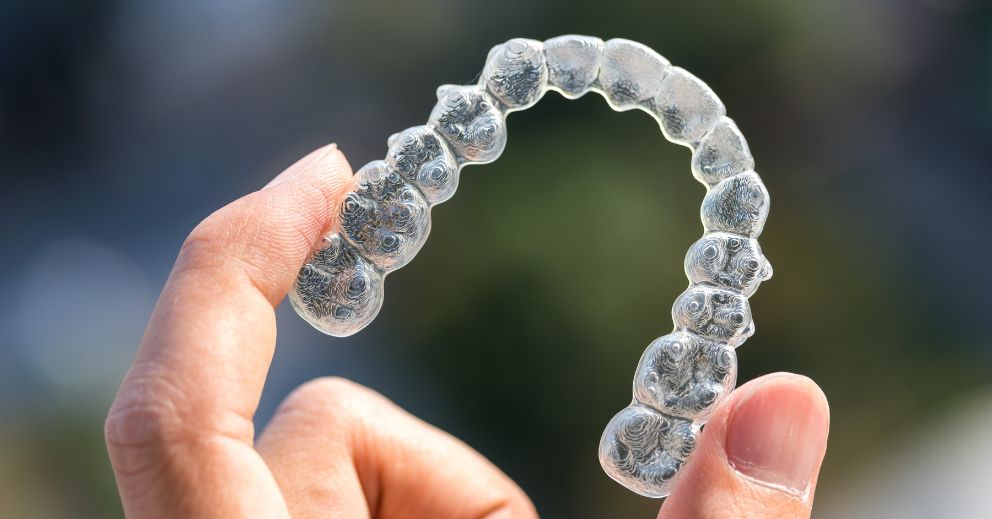
Invisalign uses a series of custom-made clear aligners that you swap out every one to two weeks. The total number of aligners in your treatment plan gives you a rough idea of how long it’ll take. Most adults finish Invisalign treatment in 12 to 18 months, though simpler cases can wrap up in as little as 6 months.
There’s also Invisalign Lite, which is designed for minor corrections and typically takes around 3 to 6 months. So for straightforward cases, Invisalign can genuinely be faster than braces.
Why these timelines aren’t set in stone
Both treatment timelines are estimates, not guarantees. Teeth move at their own pace, and every mouth is different. Your age, bone density, the severity of your misalignment, and how your body responds to the forces being applied all play a role in how quickly things shift.
Regular check-ups with your dentist or orthodontist help keep things on track. If something isn’t moving as expected, they can adjust the plan early rather than letting it drag on.
The Compliance Factor: Why Invisalign Speed Isn’t Guaranteed
The 22-hours-a-day rule
Here’s the thing with Invisalign that doesn’t apply to braces: you have to actually wear the aligners. The standard recommendation is 20 to 22 hours per day. That means you’re only taking them out to eat, drink anything other than water, and brush your teeth.
If you’re consistently leaving them out for longer, your teeth won’t move on schedule. Missed wear time means missed progress, and your treatment will take longer than planned. In some cases, significantly longer.
Braces work whether you think about them or not
This is one area where traditional braces have a real advantage. Because they’re bonded to your teeth, they’re always working. There’s no forgetting to put them back in after lunch, no leaving them on the kitchen bench, no temptation to skip a night because they’re a bit uncomfortable.
For people who know themselves well enough to admit that compliance might be a challenge, braces can actually deliver faster results in practice, even if the theoretical timelines are similar.
Who tends to do well with Invisalign?
Invisalign suits people who are motivated and consistent. Adults who understand the commitment and can stick to the routine tend to see great results within the expected timeframe. Teenagers can also do well, though some orthodontists prefer braces for younger patients for exactly the compliance reason mentioned above.
Case Complexity: When Braces Are the Faster Option
Severe crowding and complex bite issues
Invisalign has come a long way. Modern aligner technology can handle a much wider range of cases than it could a decade ago. But for significant orthodontic problems, particularly severe crowding, large overbites, underbites, or teeth that need significant rotation, braces are often still the more efficient tool.
Braces apply continuous, precise force in three dimensions. They’re particularly effective at moving teeth vertically and rotating them, movements that aligners can find more challenging. Attempting to treat a complex case with Invisalign when braces are more appropriate can actually extend total treatment time.
Simple cases where Invisalign wins on speed
For mild to moderate spacing, minor crowding, or small bite adjustments, Invisalign can absolutely be the faster option. These are the cases where Invisalign Lite or a shorter aligner series gets the job done in a fraction of the time a full set of braces would take.
If your teeth are mostly straight and you just want to close a small gap or tidy up some minor crowding, clear aligners are worth a serious look.
Getting a proper assessment matters more than you’d think
The only way to know which treatment is right for your specific situation is to get a proper clinical assessment. X-rays, photos, and sometimes digital scans of your teeth give your dentist a complete picture of what’s going on. From there, they can give you a realistic treatment timeline for both options and help you make an informed decision.
Beyond Speed: Other Differences Worth Knowing
Appearance during treatment
Invisalign aligners are clear and sit close to the teeth, making them much less noticeable than metal braces. Most people won’t notice them unless they’re looking closely. This is a significant factor for adults in professional environments or anyone who feels self-conscious about wearing orthodontic appliances.
Ceramic braces are a middle-ground option that are less visible than metal braces but still fixed. They’re worth asking about if you want the reliability of fixed braces with a lower-profile look.
Comfort and day-to-day experience
Both treatments involve some discomfort, especially in the early stages or after adjustments. Braces can cause irritation to the inside of your lips and cheeks from the brackets and wires. Invisalign aligners are smooth plastic, which most people find more comfortable overall, though they can cause some pressure and soreness when you switch to a new set.
Eating is also much easier with Invisalign since you remove the aligners for meals. With braces, you need to avoid hard, sticky, or chewy foods throughout treatment, which some people find genuinely frustrating over a two-year period.
Cost comparison in Australia
In Australia, traditional braces typically cost between $4,500 and $8,000 depending on the complexity of the case and the type of braces used. Invisalign treatment generally ranges from $6,000 to $9,000 for a full course, though simpler cases with Invisalign Lite can come in lower.
Private health insurance with orthodontic cover can offset some of the cost for both options. It’s worth checking your policy before your consultation so you know where you stand.
What happens after treatment
Whichever path you choose, retention is part of the deal. Once your teeth reach their final position, you’ll need to wear a retainer to keep them there. Teeth have a natural tendency to drift back toward their original position, especially in the months immediately after treatment.
Retainers are usually worn full-time initially, then just at night long-term. Skipping this step is one of the most common reasons people end up needing retreatment years later.
Ready to Find Out Which Treatment Suits You?
If you’re weighing up Invisalign vs braces and want a clear answer for your specific situation, the best next step is a consultation with a dentist who can actually look at your teeth. The team at Redlands Dental works with patients to help them understand their orthodontic options and choose a treatment path that fits their life, their timeline, and their budget.
Book a consultation and get a realistic picture of what teeth straightening could look like for you.
Key Takeaways
- Braces and Invisalign have broadly similar treatment timelines, typically 12 to 24 months for most cases.
- Invisalign can be faster for mild to moderate cases, especially with Invisalign Lite for minor corrections.
- Braces are often more efficient for complex cases involving severe crowding, bite problems, or significant tooth rotation.
- Invisalign only works as fast as your compliance allows. Missing wear time directly extends your treatment.
- Your age, bone density, and how your body responds to treatment all affect how quickly your teeth move.
- A proper clinical assessment is the only reliable way to get an accurate timeline for your specific situation.
- Retention after treatment is essential for both options. Teeth will drift without a retainer.
- Cost, comfort, and lifestyle factors are worth weighing alongside speed when making your decision.
FAQ
Is Invisalign faster than braces for adults?
Not necessarily. For mild cases, Invisalign can be faster. For complex cases, braces are often more efficient. Adults tend to respond well to both treatments, and compliance is generally higher in adults than teenagers, which helps Invisalign stay on track.
Can Invisalign fix an overbite or underbite?
Yes, Invisalign can address many bite issues, but severe overbites or underbites may still be better suited to braces or a combination approach. Your dentist will assess whether your bite correction falls within what aligners can reliably achieve.
What happens if I don’t wear my Invisalign for 22 hours a day?
Your teeth won’t move according to plan. You may need additional aligners, your treatment will take longer, and in some cases your current aligner set may no longer fit correctly. Consistent wear is essential for staying on schedule.
Do braces or Invisalign hurt more?
Both involve some discomfort, particularly at the start and after adjustments or aligner changes. Many people find Invisalign slightly more comfortable day-to-day because there are no brackets or wires causing irritation. That said, individual experience varies quite a bit.
Is Invisalign suitable for teenagers?
Yes, there’s a version called Invisalign Teen that includes compliance indicators and extra aligners to account for the occasional lost or damaged set. Whether it’s the right fit depends on the teenager’s case complexity and their ability to commit to the wear schedule.
Can I switch from braces to Invisalign mid-treatment?
In some cases, yes, though it’s not always straightforward. Switching mid-treatment requires a new assessment and treatment plan. It’s better to discuss all your options at the start so you can choose the right path from day one.



 Unhappy With My Smile
 I Have Missing Teeth
 Unhappy With My Dentures
 My Teeth Are Stained or Discolored
 Considering Teeth Straightening
 I Have A Dental Emergency
 Seeking Smile Improvement
 Help With Dental Anxiety
 General Dentistry
 Cosmetic Dentistry
 Restorative Dentistry
 Dental Implants
 Dental Veneers
 Invisalign
 Emergency Dentist
 Sedation and Sleep Dentistry