
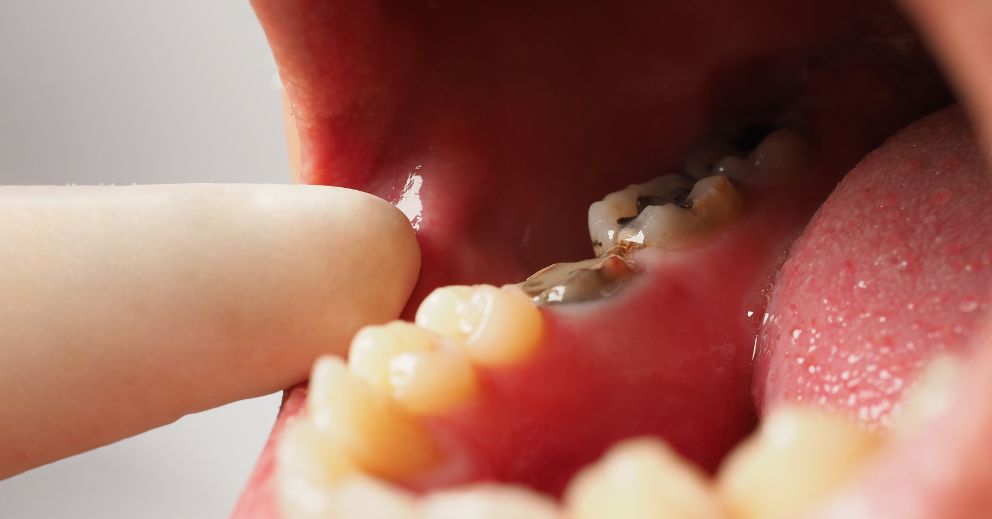
7 Early Signs of Tooth Decay You Should Never Ignore
It does not hurt, so it cannot be a cavity, right? We hear that a lot, and it is an understandable assumption. But early decay often gives no warning, and by the time a tooth aches, the repair is usually bigger than it needed to be.
Although early decay often has no obvious symptoms, there are some changes worth looking out for. This guide covers what is happening inside the tooth, seven signs worth acting on, and what we do about them.
Who tooth decay affects, and what it actually feels like
Anyone with teeth can get decay. We see it in children and teenagers, but also in adults who have never had a filling in their lives. Risk climbs with dry mouth (often a side effect of regular medications), receding gums that expose the softer root surface, braces that trap plaque, and a habit of sipping or grazing through the day.
What it feels like depends on how far it has gone. At first, usually nothing. Then a brief twinge with something cold or sweet that fades in seconds. Later, a lingering ache, pain on biting, or a throb that shows up at night. The longer a sensation hangs around after the trigger is gone, the deeper the trouble tends to be.
What is actually going on inside the tooth
Acid wears away the enamel
Plaque, the sticky film of bacteria on your teeth, feeds on sugars and starches and gives off acid. That acid pulls minerals out of the enamel, the hard outer shell of the tooth. This mineral loss is called demineralisation.
Your saliva pushes back by neutralising acid and returning minerals, and fluoride helps that process along. Australia’s Better Health Channel notes that fluoride repairs weak spots before they turn into cavities. Decay is what happens when the losses outpace the repairs for long enough.
Why how often you eat matters more than how much
Every sugary or starchy mouthful restarts the acid cycle, and your mouth needs time to recover afterwards. A single dessert is less of a problem than a sweetened coffee sipped over three hours. Frequent, small exposures leave your enamel with no recovery window.
Dry mouth and exposed roots stack the odds further. Less saliva means less protection, and root surfaces have no enamel covering, so they tend to break down more easily.
Breaking through to the dentine
Beneath the enamel sits dentine, a softer layer with tiny channels leading towards the nerve. Once decay reaches it, sensitivity becomes much more likely, and the progression beyond the enamel is usually when people first feel something. It also speeds up, because dentine gives way to acid more readily than enamel does.
The nerve and the risk of infection
If decay reaches the pulp, the soft centre of the tooth containing nerves and blood vessels, the pain often turns constant or spontaneous. Bacteria can then spread and form an abscess, a painful pocket of pus.
Seven early signs worth acting on
These are roughly in order from earliest to later. Having one does not mean you have a cavity, but each is a reason to have a dentist look.
1. White or chalky patches
A dull, chalky white spot, often near the gum line, can be the first visible change. It marks the stage where minerals have been lost but the surface has not yet collapsed. Cleveland Clinic describes these small chalky spots as the first stage of decay. Not every white patch is decay, which is why we look rather than guess.
2. A quick zing with cold, sweet or air
A sharp, short jolt from cold, sweet foods or air can be a sign of decay, although worn enamel, gum recession and other problems can cause similar sensitivity. It is also the sign people talk themselves out of most often.
3. Food that keeps catching in one spot
If floss shreds or snags in the same gap, or food packs into one place every meal, there may be a rough edge or a cavity forming between the teeth. This is one of the most commonly missed signs, because decay between teeth is hard to see in a mirror.
4. Brown, grey or black marks
Darker spots in the grooves of back teeth or along the gum line can indicate decay that has progressed. The caveat is that tea, coffee and tobacco stain teeth too. A stain that sits in a pit or groove, or that feels rough or soft, deserves more attention than an even surface stain.
5. A rough patch or tiny hole
Your tongue is a good detector. If it keeps finding a rough spot, a pit, or a small edge that was not there before, tell us. Small holes can be shallower on the outside than they are underneath.
6. Discomfort when you bite or after sweet food
A dull ache after something sugary, or tenderness when you bite down on one tooth, often points to decay that is getting closer to the nerve. Biting pain can also mean a crack, which we cover below.
7. A bad taste or breath that seems to come from one place
Breath that stays unpleasant after brushing, or a sour taste linked to one tooth, can come from bacteria collecting in a cavity or around a damaged filling. Gum bleeding around a single tooth is worth mentioning too.
What early tooth decay is often mistaken for
Several other problems look and feel similar, and sorting them out is part of what a dental exam is for.
Gum recession or worn enamel. Both can cause cold sensitivity with no cavity at all. The treatment is different, so a guess at home can send you the wrong way.
A cracked tooth. Pain on biting that eases when you release is a common pattern with cracks, and it is easy to blame on decay.
Gum disease. Bleeding, bad breath and tenderness can come from inflamed gums rather than a tooth.
Sinus pressure. A sinus problem can make the upper back teeth ache all at once. Decay usually points to one tooth.
The reverse also happens. People sometimes put up with real decay for months because they assume it is just sensitivity from brushing too hard.
When to seek urgent care
Decay on its own is rarely an emergency, but an infection can be. Get help straight away for any of these:
- Swelling of the face, jaw or neck, especially with a fever or feeling unwell.
- Trouble breathing, swallowing or opening your mouth. Call 000 or go to your nearest emergency department immediately.
- Severe or throbbing toothache that keeps you awake or does not ease with pain relief.
- A pimple like bump on the gum, or a salty, foul tasting discharge, which can point to an abscess.
- Swelling that is spreading towards the eye or down the neck.
For anything urgent that is not an emergency, call us early in the day and tell the team it is urgent. Please do not wait for a routine appointment.
What to do in the short term
While you wait to be seen, these steps can keep things calmer:
- Brush twice a day with fluoride toothpaste, and be gentle around the sore area.
- Cut down how often you eat or sip sugary and acidic things, rather than only how much.
- Avoid very hot, very cold or very sweet foods on the affected side.
- Clean between your teeth carefully, especially around the area that catches food.
- If you need pain relief, use over the counter products exactly as the packaging directs, and check with a pharmacist if you take other medication.
- Do not poke at a hole or put anything on the gum. It will not fix the tooth, and it can irritate the area.
None of this treats decay. It only buys time until you are seen.
How we treat it
Step one: the assessment
We look at each surface of the tooth, check the gums, and ask what you have noticed and when it happens. Small X-rays are usually needed as well, because decay between teeth and under fillings is invisible from the outside.
Step two: matching the treatment to the stage
The earliest enamel changes can sometimes be managed without drilling. Fluoride treatments can reverse early decay, usually combined with better home care and a closer watch. A dentist has to judge whether a patch is still repairable.
Once there is a cavity, the usual approach is to remove the softened tooth structure and place a filling that matches your tooth colour. For moderate damage that is too large for a filling but does not need a crown, an inlay or onlay is an option that keeps more of your natural tooth.
If decay has reached the nerve, root canal treatment may require one or more appointments, depending on the tooth and the extent of the infection.
What recovery looks like
Same day. We numb the area, so you should not feel the work itself. The numbness wears off over a few hours, so wait before eating hot food or chewing on that side.
The first few days. Mild sensitivity or a slightly high feeling when you bite is common after a filling. It often settles, but tell us if the bite feels wrong or the ache is getting worse.
The following weeks and months. We recheck the tooth at your next visit and set a review schedule based on how quickly your teeth have been changing. Deeper work such as a root canal usually involves more than one appointment.
Will you need a scan or surgery?
For most people, no surgery. Small X-rays are the usual imaging, and larger 3D scans are kept for specific questions rather than routine decay. Fillings, inlays and onlays are done in the chair, and even a root canal is a restorative procedure rather than surgery in the usual sense.
Extraction becomes the option only when a tooth cannot be saved. If nerves are the barrier to booking, ask about our sedation options before the day.
Keeping decay from coming back, and booking an assessment
Prevention is mostly consistent, unglamorous habits: fluoride toothpaste twice a day, cleaning between your teeth, and giving your mouth breaks from constant snacking and sipping. If you have a dry mouth, tell us. It changes your risk and there are ways to help. Regular visits every 6 to 12 months catch changes while they are still small, and we will tell you where you sit in that range.
One caveat worth knowing: decay can start again at the edge of an existing filling or crown. That is not a failure. It is one more reason a regular check matters, even when your teeth feel fine.
If you have noticed any of the signs above, or you simply cannot remember your last check, book an assessment at our Capalaba or Victoria Point clinic. We open on Saturdays, and new patients can ask about our $199 check and clean.
FAQ
Can early tooth decay be reversed?
Sometimes. Before the surface has broken into a cavity, minerals can be restored with fluoride and better habits. Once a hole has formed, it needs a filling.
Does a cavity always hurt?
No. Many do not hurt until they are large or close to the nerve, which is why regular check-ups matter.
How fast does decay spread?
It varies with diet, saliva, home care and the tooth itself. Some spots change slowly over years, others move faster. That is why we monitor rather than assume.
Will I always need a filling?
No. The earliest changes may be managed with fluoride and monitoring. The decision depends on what we see and feel on the exam.
Can a tooth decay under an old filling?
Yes, along the edges especially. Small X-rays and a careful check help us catch it.
Can children get tooth decay?
Yes, including in baby teeth, which matter for guiding adult teeth into place. Our children’s dentistry page has more.



 Unhappy With My Smile
 I Have Missing Teeth
 Unhappy With My Dentures
 My Teeth Are Stained or Discolored
 Considering Teeth Straightening
 I Have A Dental Emergency
 Seeking Smile Improvement
 Help With Dental Anxiety
 General Dentistry
 Cosmetic Dentistry
 Restorative Dentistry
 Dental Implants
 Dental Veneers
 Invisalign
 Emergency Dentist
 Sedation and Sleep Dentistry